Vill du också ha tillgång till vårt videobibliotek?

  • 2500 videor
  • Ingen bindningstid
  • Testa utan kostnad

Välkommen till vår blogg

Yoga, träning och hälsoinspiration för dig

60 of the most recommended yoga books

60 of the most recommended yoga books

30 november 2013 | Av
Yogobe

Thinking of what to gift your favorite yogi? They would love to receive a sparkly, new yoga book to geek out with. Here are some suggestions organized by category

Testimonials:

Yogi Bare: Naked Truth by Philip Self
Yoga from the Inside Out by Christina Sell
Yogini: the Power of Women in Yoga by Janice Gates
Misadventures of a Garden State Yogi by Brian Leaf

Meditation:

Lovingkindness: The Revolutionary Art of Happiness by Sharon Salzberg
A Path With Heart: A Guide through the Perils and Promises of Spiritual Life by Jack Kornfield
Wherever You Go, There You Are by Jon Kabat-Zinn
The Wisdom of No Escape and the Path of Loving Kindness by Pema Chodron
Peace Is Every Step by Thich Nhat Hanh
Faith by Sharon Salzberg

Ayurveda:

Ayurveda Revolutionized: Integrating Ancient and Modern Ayurveda by Edward Tarabilda
Ayurveda: A Life of Balance by Maya Tiwari
What’s Your Dosha Baby? by Lisa Marie Coffey
Yoga and Ayurveda by Dr. David Frawley
Prakriti: Your Ayuvredic Constitution by Dr. Robert Svoboda
Yoga & Ayurveda: Self-Healing and Self-Realization by Dr. David Frawley
The Complete Book of Ayurvedic Home Remedies by Vasant Lad
Yoga for your Type: An Ayurvedic Approach by Dr. David Frawley
Ayurveda for Women by Maya Tiwari

Philosophy

Bringing Yoga to Life by Donna Farhi
Eastern Body Western Mind by Anodea Judith
Downward Dogs and Warriors: Wisdom Tales for the Modern Yogi by Zo Newell

Hatha Yoga Practice

Light on Yoga by BKS Iyengar
Yoga The Spirit and Practice of Moving Into Stillness by Eric Schiffmann
Jivamukti Yoga by Shannon Gannon and David Life
Yoga for Wellness by Gary Kraftsow
Yoga: The Iyengar Way by Silva, Mira, and Shyam Mehta
Living Your Yoga: Finding the Spiritual in Everyday Life by Judith Lasater
The Heart of Yoga: Developing A Personal Practice by Desikachar
The Language of Yoga by Nicolai Bachman

Pranayama and Breath:

Light on Pranayama by B.K.S. Iyengar
The Yoga of Breath: A Step-by-Step Guide by Richard Rosen

Teaching Skills

Teaching Yoga: Exploring the Teacher-Student Relationship by Donna Farhi

Yoga History:

The Yoga Sutras of Patanjali by Swami Satchitananda
The Secret Power of Yoga by Nischala Joy Devi
Hatha Yoga Pradipika by Swami Swatmarama

Anatomy/Physiology:

Yoga as Medicine: The Yogic Prescription for Health and Healing by Timothy McCall, M.D.
Yoga Anatomy by Leslie Kaminoff
Anatomy of Movement by Blandine Calais-Germain
The Anatomy Coloring Book by Kapit & Elson
The Key Muscles of Hatha Yoga by Ray Long

Inspirational

Go In and In: Poems From the Heart of Yoga by Danna Faulds
The Alchemist by Paulo Coelho
Buddha: A Story of Enlightenment by Deepak Chopra
Meditations from the Mat: Daily Reflections by Rolf Gates
Awakening the Buddha Within by Lama Surya Das
Shantaram by Gregory David Roberts
Siddhartha by Hermann Hesse

Poetry

The Soul of Rumi by Coleman Barks
The Gift by Hafiz
Sweat Your Prayers by Gabrielle Roth
The Essential Rumi, New Expanded Edition by Jalal al-Din Rumi

Nutrition

Omnivore’s Dilemma by Michael Polland
Radical Healing by Rudolph Ballentine
If the Buddha Came to Dinner by Sofia Hale Schatz
Creating Health by Deepak Chopra
Food & You by Sari Harrar and Barbara Loecher
Healing with Whole Foods by Paul Pitchford
Food and Healing by Annemarie Colbin
Feeding the Body Nourishing the Soul by Deborah Kesten

Source: yoganonymous 
Öppna inlägget
12 tips for a better yoga practice

12 tips for a better yoga practice

28 november 2013 | Av
Yogobe

Känner du dig yr, irriterad eller dömer du kanske rentav både dig själv och instruktören under yogapasset? I så fall har vi 12 fina tips som du kan ta till dig för att få ett bättre yogapass. Följande tips ges på engelska. Lycka till med ditt nästa yogapass.

Hydrate all day: Drinking water in the middle of your practice can mess with your flow, so arriving hydrated is necessary. Focus on drinking water all day long; you’ll be amazed at what a difference it will make.

Show up early: Rushing into the studio with a harried mind and no time to chill gets your practice off to a rough start. Allow at least 10 more minutes than you think you’ll need to have plenty of time to change clothes, check in with a cool mind, and sip on some tea, if you can.

Dress the part: There’s nothing worse pulling up the waistband of your pants or making sure your top doesn’t spill out of your built-in bra all class long. That’s not where your mind needs to be during your Downward Dog. Wear clothes that are fitted and comfortable, but not so snug that they’re distracting.

Grab props: More advanced yogis sometimes shy away from grabbing props, but there’s no harm in keeping them next to your mat. Grab a block, strap, and blanket before you take your seat. You’ll never know when you’ll need one.

Be quiet before class: I’m known to chat up a storm with fellow yogis in the moments before class, but do you best to stay quiet and turn inwards. Lay on your back or sit up with your eyes close to connect with yourself and prep for class.

Expect nothing: If this is the only piece of advice you take away from this list, you’ve learned a great lesson. Some days you’re going to be able to fly into a crazy arm balance and other days things are going to be more difficult. Every day our bodies are working with something different; don’t expect anything to look or feel a certain way.

Stop judging: You know that checking everyone out in the room isn’t a good use of your time, you might not even be aware of how much you’re comparing your progress to other students in the class. Keep your mind on your mat, and keep your attitude positive and full of possibility.

Breathe deep: It takes years and years to “perfect” your breath. Whenever a pose is feeling difficult or your feel some self-judgment creeping in, take deep ujjayi breaths in and out through your nose. They will help you release any tension or negativity and help you continue class with a more composed, calm perspective.

Listen to your teacher: Obviously, your teacher is going tell you which pose is up next, but don’t tune them out once you’re in a pose! I find that the tiny details or suggestions they offer once you’re in the pose are the real gems. One subtle tip could help you develop a completely new relationship with a pose that seemed too hard — or too easy.

Smile more: Yes, I know; this one is corny, but it works. Once you’re really flowing, your muscles have heated up, and your breath is connected to your movement, get grateful and start smiling. There’s no need to plaster an inauthentic expression across your face for 45 minutes, but there is plenty of opportunity to stop taking yourself so seriously during class. Smile and mean it; you’re taking care of your body just by being in class.

Try something new: If a pose comes around that you always skip or think you’re “not ready” for, try it tonight. The only way we conquer challenging poses is by experiencing the fear and moving through it. You might not nail it right away, but the only way you’ll eventually be able to hold it is if you try.

Stay in Savasana: Don’t leave or mentally check out during Savasana. Let all of your lists and obligations go; I promise they’ll be there after class. That five or 10 minutes of final relaxation is worth it, because you’re worth it.

Source: Yogaanonymus 


Öppna inlägget
FAQ Yoga for seniors

FAQ Yoga for seniors

27 november 2013 | Av
Yogobe

Kan man yoga när man är över 65-70 år? I detta "frågor och svar"-inlägg med temat yoga för seniorer så finner ni svaren på det vi oftast undrar över - är yoga verkligen för alla? Inlägget är på engelska och guidar till kunskap om yoga för seniorer.

We are as young as we feel! Yoga asanas tone up the body, keep our internal organs and the hormonal system in balance, and refreshes the mind and spirit. Hence, it is essential for people of all ages to practice yoga regularly. Following Q&A's.

1. Can seniors (above 65 years) do yoga asanas?

As age progresses, one should focus on doing to the best of our bodily abilities. It is more important to focus on HOW YOU DO rather than how much you can do. Yes, of course older people can do asanas. The basic premise in yoga is union - union of the various aspects of our existence like body, breath, mind etc. In fact the word yoga comes from a Sanskrit root 'Yuj', which means 'to unite'. Hence, it is possible for people of all ages and from all walks of life to utilize the techniques of yoga for creating a harmonious and joyful existence. Elderly can do yoga asanas - provided they keep some guidelines in mind.

2. What kind of asanas should one do as age progresses?

  • Substitute warm-ups with brisk walking and joint movements.
  • Standing Yoga Poses Triangle Pose (konasana series) and Standing Spinal Twist (Kati chakrasanas)
  • Sitting Yoga Poses Butterfly Pose, Cradling (if possible), body rotation, Cat stretch and Child pose (Shishu Asana).
  • Yoga Poses lying on the back or stomach Focus on repetitions rather than holding any posture such as the Cobra Pose (Bhujangasana), the Locust Pose (Shalabhasana) or the Knee to Chin Press (Pawanmuktasana).
  • Yoga nidra is by far the most essential part of any yoga practice, and as age progresses, it becomes even more essential to help assimilate the effect of the asana practice into our system.

3. Are there any easy exercises for senior people?

Sukshma Yoga may be practiced independently or as part of a larger yoga plan. People of every age can practice and receive the benefits of these exercises that can be comfortably practiced within 20-30 minutes. It includes simple and gentle exercises for the eyes, tongue and jaws, neck, hands, feet, knees, ankles and hips.

4. How should senior people practice yoga asanas?

The Patanjali Yoga Sutras define asana as "sthira sukham asanam" that which is stable and comfortable is an asana. Thus, any posture, held with awareness, in a stable and comfortable manner constitutes an asana.

5. Are you getting your yoga practice right?

Check your inner gauge, your smile-o-meter. Just do as much as you can, with a smile, for that is the indicator, which tells you whether you are doing it right or not.

6. How does yoga practice for seniors differ from those for the young?

The same asanas performed by a younger individual could be more challenging in terms of effort put into the posture, the duration of holding the posture and amount of flexibility required. Some cardio vascular movements and abdominals would be more appropriate for a person with higher level of endurance and body fitness.

7. Do yoga asanas increase the efficiency of immune system for the elderly?

Here again, the Patanjali Yoga Sutras provide a clue - it says - "heyam dukham anaagatam", so that we can avoid the misery that has not yet come. As our age increases, the efficiency of our bodies and immune system seems to deteriorate, bringing on the possibility of various diseases. Regular practice of yoga techniques, such as asanas, pranayama and meditation can help to avoid these conditions, remove the misery, and lead to a happier and more fulfilling life.

Photo: Shutterstock.com

Source: Artofliving

Öppna inlägget
Träning på mattan - del 4

Träning på mattan - del 4

25 november 2013 | Av

Utmaningen att vända dig upp-och-ner fortsätter! Det är lättare än du tror, och extremt kul och inspirerande. En utmaning för kroppskontrollen och ett fint sätt att stärka musklerna över axlar, bål och ben. Våga vänd din kropp upp-och-ner!


Missade du introduktionen till denna den utmaning hittar du den här.
För att lära dig stå på huvudet rekommenderar vi här videos som förbereder dig och passar temat. Om du inte är van vid att stå på huvudet eller känner dig osäker så tycker vi att du skall fortsätta stå på händer men var med och låt dig inspireras och lär dig. Ha kul på mattan!

Videoförslag, huvudstående
 

Måndag: Teknik huvudstående, 10 min - Ulrica lär dig implementera huvudstående i din yogapraktik, samt vad som krävs tekniskt, på ett enkelt och säkert sätt.

Tisdag: Tadasana, bergspositionen, 5 min - Detta är urmodern av alla yogapositioner. Ulrica lär dig grunden till god hållningsteknik som du sedan kan ta med dig in i andra asanas för att motverka skador eller andra obalanser.

Onsdag: MOJO yoga®1 - Eld, 30 min - Ett yogaflöde med 3 vågor som alla utgår från samma ställningar. Våg 1 utförs statiskt, våg 2 dynamiskt och våg 3 bygger upp till denna sekvens peakposition - huvudstående.

Torsdag: Lunch breath break, 10 min - några lugna rörelser och en andningsövning som ger energi och sänker stress. 

Fredag: Huvudstående, 60 min - Teknik för peakposition i MOJO yoga1.

Lördag:  Power Book - kapitel 8 Mage, 10 min - Älska din mage! Ge den en utmaning med Kitty. 

Söndag: Vilodag eller valfritt pass som ni kan söka på under VIDEOS


Om du inte redan är del av vårt community, gå med i vårt community på Facebook #BEYOGA365, där vi pratar yoga, inspirerar varandra till yoga i vardagen och från Yogobes håll 365 dagar om året vägleder er med kunskap, teman och passande yoga-videos som du kan göra i vardagen. Var med en dag då och då, en hel månad när du kan eller varför inte följa oss genom året?

Öppna inlägget
5 ways to nail your Headstand

5 ways to nail your Headstand

17 november 2013 | Av
Yogobe

Are you scared of doing a head stand? Maybe you've tried it several time woyh no success. Here are five reasons to why we might have difficulties performing a head stand and some tips to how you can get yourself upside down.


You’re Scared of Falling
This is a very real fear and a valid reason for not even attempting Headstand, but how will you know whether or not you can balance upside down if you never give it a chance? There are many ways you can do a Headstand and avoid the risk of falling. Try one of these: do Headstand in front of a wall, have someone spot you, slowly lift into Headstand instead of kicking up, or start with a Bound Headstand Prep where your feet never leave the ground (it’s still a Headstand if you’re balancing on your head).

Your Base Is Unstable
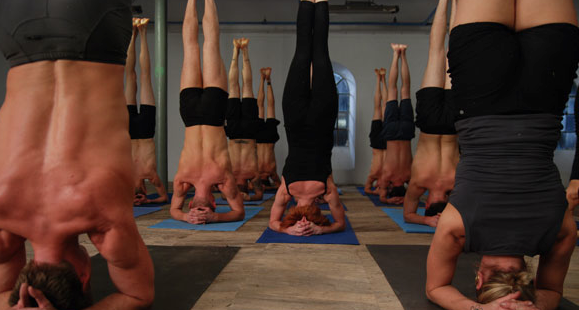
Whether you’re doing Bound Headstand (shown in the photo above) or Tripod Headstand with your palms on the ground, your base needs to be strong and stable in order to support the weight of the rest of your body. In Bound Headstand, make sure the heels of your palms are pressed against the back of your head, and your elbows are a few inches away from your ears. In Tripod Headstand, keep your elbows at 90-degree angles. A strong base is the first step in building up to Headstand.

Your Upper Body Is Weak
Although Headstand takes a strong sense of balance, a strong upper body is also essential. If you feel like your upper body is weak, you won’t be able to create and hold your stable base. Tone up those biceps, triceps, shoulders, and the muscles in your upper back by doing upper-body sculpting poses, and throw in some of push-up variations.

Upper-Body Sculpting Poses:
:: Three Legged Dog
:: Sage Pose
:: Crow Pose
:: Wheel Pose
:: Bound Headstand
:: Forearm Stand

Your Core Is Weak
Slowly lifting into Headstand rather than jumping into it will help prevent falling, since the momentum of your flailing legs tends to make you lose your balance. And although getting into Headstand this way is much safer, since you’re moving slowly, it takes a whole lot of core strength. Start in the Bound Headstand Prep position, with your legs straight and your feet on the floor. Try bending your knees into your chest in the Tuck position, and eventually you will be able to lift your legs straight into the air. If your midsection isn’t strong enough yet, practice Boat pose and scissor abs to target your core. Try these five core strengthening yoga poses too.

Your Alignment Is Off
From the photo above, you can see that your hips should be stacked over your shoulders, and your feet stacked over your hips. If your torso isn’t in a straight line with your abs engaged, it will be impossible to balance, even with a strong base. Ask your yoga instructor to watch you do Headstand so they can help you get your alignment right.

Source: Yoganonymous

Öppna inlägget
3 tips to get the most out of Savasana

3 tips to get the most out of Savasana

16 november 2013 | Av
Yogobe

Savasana, även kallad dödmansställning, är som ni vet den viktigaste yogapositionen. Det är här som kroppen får återhämta sig och där nervsystemet får chans att hinna ikapp och tillgodogöra  sig positionerna som du gjort under din yogapraktik. I detta blogginlägg, på engelska, får du tre tips på hur du får den skönaste savasanan.

Savasana (Corpse Pose) is really my favorite pose no matter how vigorous or mellow my practice ends up. I love when I can have a few extra minutes in Savasana, so when an instructor gives the option to stay in Savasana a little longer, I take that opportunity. You have this option, too, and I usually offer it in my classes.

I see it every time I lead a practice: the urge to get up and leave right away, the thoughts and “to do” lists starting to enter the mind, and more. It's very easy to let your to-do list creep back into your mind, or even to set an after-class action plan in your head before you leave your mat. Resist the urge and allow yourself to stay a bit. Remember that one minute is less than 1% of your day, so staying an extra minute while others are in a rush to get out of the studio could be a good option for you.

A blissful Savasana can be the perfect way to end your practice if you let it. Find the moment of stillness and relaxation that's just before the moment when you fall asleep. Linger in that area of relaxed awareness, passively observing yourself and that around you. Just be! Below are a few tips to get the most out of your Savasana.

1. Think about NOTHING.

Yes, nothing! Completely empty your mind for just a minute or two while you're in Savasana. It's when our minds fill with thoughts that we start to get anxious and want to act on them. If you can’t completely empty your mind, try focusing on one thought. Explore why you chose to focus on it, and explore ways to table that thought until a few minutes later. Maybe tune in to your breath as your sole focus. Slow it down to a resting breath pace. Feel the consistency of the air as it passes through your lungs. Let go of time and be present.

2. Use props and melt into your mat.

Give all of your body weight to your mat. Said another way, fully relax. If it feels uncomfortable to lie still on a hard floor, support yourself with props. Options include placing a block underneath the backs of your knees or underneath the ankles. This helps circulate blood better, and helps to reduce overarching in the low back. Another idea is to cover your eyes with a towel or mask or place a light sandbag across the hips to ground you more.

Find a neutral alignment in the spine, allowing the natural curves in the spine to occur. Allow yourself to use the props as tools for your practice. Let them help your practice instead of acting as a distraction for your mind and keeping you from stillness as you fuss over the placement of your props. Once aligned, melt into your props or your mat. Give all of your weight to them. Feel fully supported by the strong, solid ground beneath you.

3. Try aromatherapy.

Let your senses help you in Savasana. A drop or two of essential oils on the chest or temples, or even on a small face towel you put across the forehead can help to promote calmness throughout your body. Avoid strong scents that will overstimulate you. Some great suggestions include lavender oil (I personally enjoy a good lavender-lemon mix), sandalwood, and ylang ylang. Test the oils first with a drop or two to ensure you aren't allergic. If all is well, enjoy!

There are many more ways to explore your Savasana, but these are some just to get started. Here's wishing you a wonderful practice and blissful Savasana!

Source: MindBodyGreen

Öppna inlägget
ISHTA - Welcome to Yogobe

ISHTA - Welcome to Yogobe

13 november 2013 | Av
Yogobe

I somras inledde vi ett mycket spännande samarbete med den globalt erkände Gurun Alan Finger,  och ISHTA Yoga. Vi filmade dem bland annat Live vid ett retreat i Varberg. Delar av detta material finns nu publicerat på Yogobe.

Vi börjar med en guidad meditation och en tillhörande lärorik föreläsning. Logga in och klicka för "Ishta yoga" under VIDEOS. Fler filmer och pass inom Ishta kommer inom kort. I följande blogginlägg, på engelska, kan du läsa om vad ISHTA är och om dess grundare Alan Finger. Yogobe-medlemmar kommer framöver ha chans att ta del av såväl yogavideos som guidade meditationer inom ISHTA, vilka leds av Alan Finger, Sarah Finger och ISHTAS Sverigerepresentant Ulrica Norberg.

What is ISHTA?

ISHTA stands for the Integrated Science of Hatha, Tantra, and Ayurveda; understanding more about these three key sciences of yoga will assist us in developing and sculpting the best yoga practice for each of us.

Hatha relates to the physical body. In practising a sequence of asanas (postures) and pranayama (breathing techniques), we start to open the body’s channels so that energy can flow freely and we can begin to enjoy the feeling of bringing the body back into balance.

Tantra comes from the root words tanoti (”expansion”) and trayati (”liberation”). In ISHTA, tantra refers to the oneness between the individual and the universe (often likened to a drop of water in the ocean), and the ability to expand and liberate the individual consciousness in order to connect to our inherent divinity. We practice tantra by using breathing and meditative techniques that expand our awareness of the more subtle aspects of being.

Ayurveda is the science of life; specifically, what keeps us alive. Prana is the body’s life force and it is uniquely manifested in every individual. If we can understand how prana interacts with five key elements (air, space, fire, water, and earth), then we can begin to understand our body’s constitution. Knowing what makes us tick and, importantly, what doesn’t, is how ayurveda restores balance and ultimately brings us back to optimal health and well-being.

An ISHTA class brings together asana to stretch, strengthen, balance, and release the physical body; pranayama with visualization to still and quiet the mind; and meditation to expand our awareness, with the goal of releasing energy and liberating consciousness.

ISHTA History
ISHTA yoga was founded in the 1960s by Mani Finger and his son Alan. Their intention was to integrate all the different systems and teachings from two decades of study with famed yogis such as B.K.S Iyengar and Swami Nishraisananda and to bring yoga into the modern world.

In Sweden, ISHTA Yoga Sadhaka (Masteryogi in training) yogini, Ulrica Norberg, represents ISHTA yoga and its lineage.

Sources: Ishtayoga.com / Ishtayoga.se

Öppna inlägget
Tankar under meditation

Tankar under meditation

02 november 2013 | Av

Tankar under meditationen. Ett virrvarr av väsentliga och oväsentliga tankar. "...jag undrar vart min tåring tog vägen. Jag har letat. Kanske borde jag bjuda över min systerdotter, hon är liten, hon kan hitta en liten ring..." och så vidare. Och det är ju ok, det är något att acceptera. 

Ok. Meditera var det. Fokus!
Andetag, andetag. Ande in, ande ut.

Jag hatar verkligen... eller kanske inte hatar. Hat är en så stark känsla. Ogillar! Jag ogillar verkligen när -...

Vad var det jag tänkte på?!
Meditera var det ja...
Jag borde kanske meditera i huvudstående? Det skulle hålla mig fokuserad,eller?

Andetag, andetag. Ande in, ande ut.

Undrar om mitt x är gay. Ok, de var en underlig tanke. Vi hade ju en relation så varför skulle han?... Men ändå... Varför tänker jag på det här?!
Jag borde bjuda över min systerdotter. Jag är säker på att hon skulle hitta min tåring.

Nu! Fokus! Jag tolererar inte det här babblet något mer!
Andetag, andetag. Ande in, ande ut. Sidokroppen lång, inre kroppen ljus. Ljus, ljus inre kropp. Ljus och skinande.

Oh! Jag har stretchträning med JC idag, då hinner jag kanske inte till stallet... men jag måste ringa det där samtalet. Om jag ringer vid en tidpunkt då hon troligtvis är upptagen och inte kan svara, då kan jag lämna ett meddelande på svararen och så är det iallafall gjort! Bra plan.

Andetag, andetag. Hur länge har jag suttit så här? Är inte meditationen slut snart?

Ande in, ande ut.


Öppna inlägget